Ever looked at a football game and seen Eagles +3.5 or Cowboys -3.5 and wondered what the heck those numbers mean?
You're not alone.
Sports betting can look confusing when you're first getting started. There are plus signs, minus signs, decimals, moneylines, spreads, and all kinds of numbers.
But here's the good news.
Point spreads are actually pretty simple once somebody explains them without making them complicated.
Let's break it down.
First, What Is a Point Spread?
Imagine two football teams are playing.
One team is really good. The other team isn't quite as good.
If you simply picked which team would win, everyone might choose the better team.
So sportsbooks use something called a point spread to make betting on either side more competitive.
Think of it like giving one team a head start.
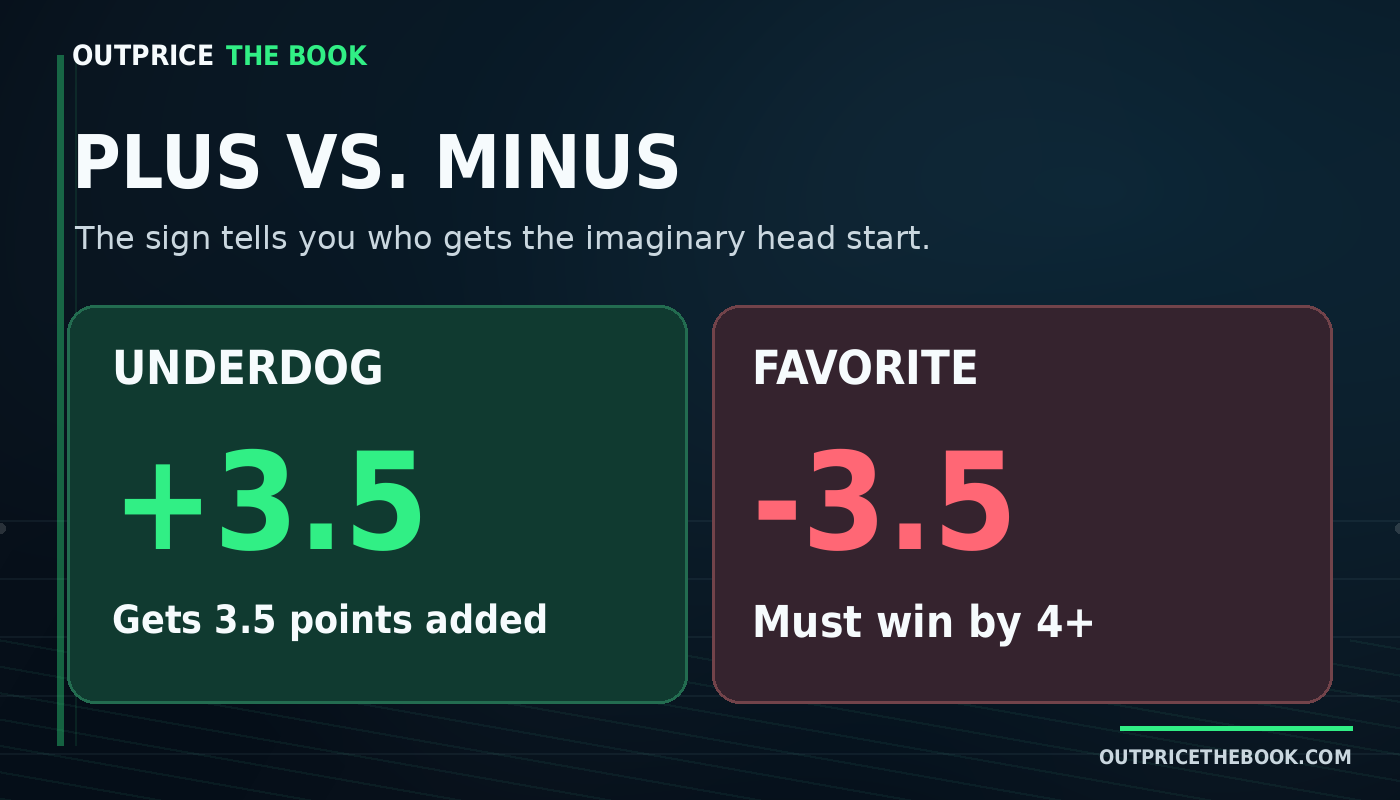
The better team has to win by a certain number of points. The other team gets a few imaginary points added to its score for betting purposes.
That's it. That's the basic idea.
Here's the easiest way to remember it:
- Plus sign (+): Your team gets extra points.
- Minus sign (-): Your team has to win by more than the number shown.
Those extra points don't change the real football score. They only matter when deciding whether your bet wins.
What Does +3.5 Mean?
Let's say you're looking at this football game:
Dallas Cowboys vs. Philadelphia Eagles
The sportsbook shows:
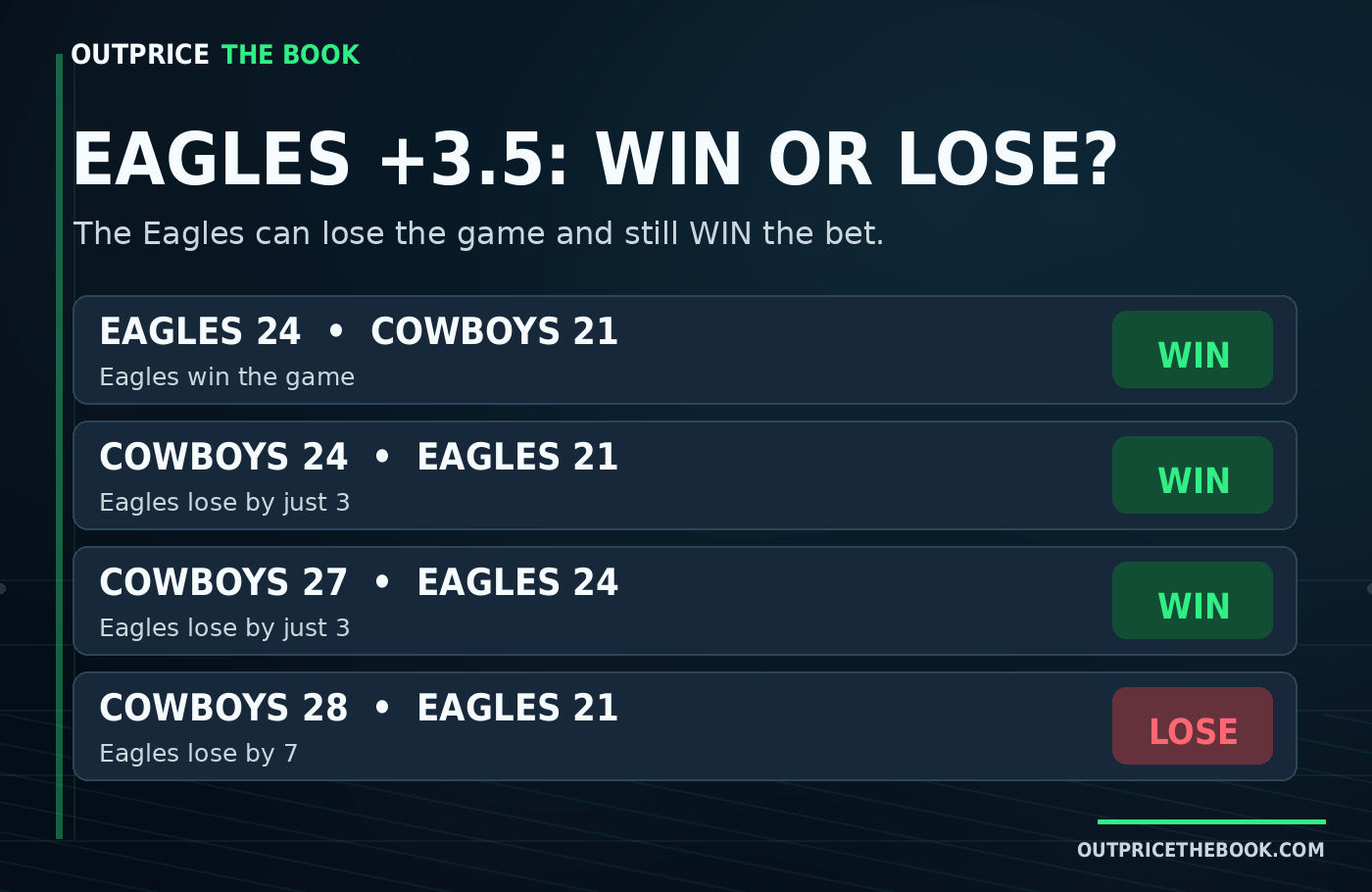
Eagles +3.5
That means Philadelphia gets an imaginary 3.5-point head start.
Now here's the important part:
The Eagles do NOT have to win the actual football game for your bet to win.
They can lose the game by 1, 2, or 3 points, and you still win your bet.
Let's look at a few examples.
| Final score | Eagles +3.5 bet |
|---|---|
| Eagles 24, Cowboys 21 | WIN — Eagles won the game |
| Cowboys 24, Eagles 21 | WIN — Eagles only lost by 3 |
| Cowboys 27, Eagles 24 | WIN — Eagles only lost by 3 |
| Cowboys 28, Eagles 21 | LOSE — Eagles lost by 7 |
See how that works?
The Eagles could lose the football game, but you could still win money.
That's called covering the spread.
If Philadelphia wins outright, the +3.5 bet wins too.
What Does -3.5 Mean?
Now let's switch sides.
Instead of betting Eagles +3.5, you take:
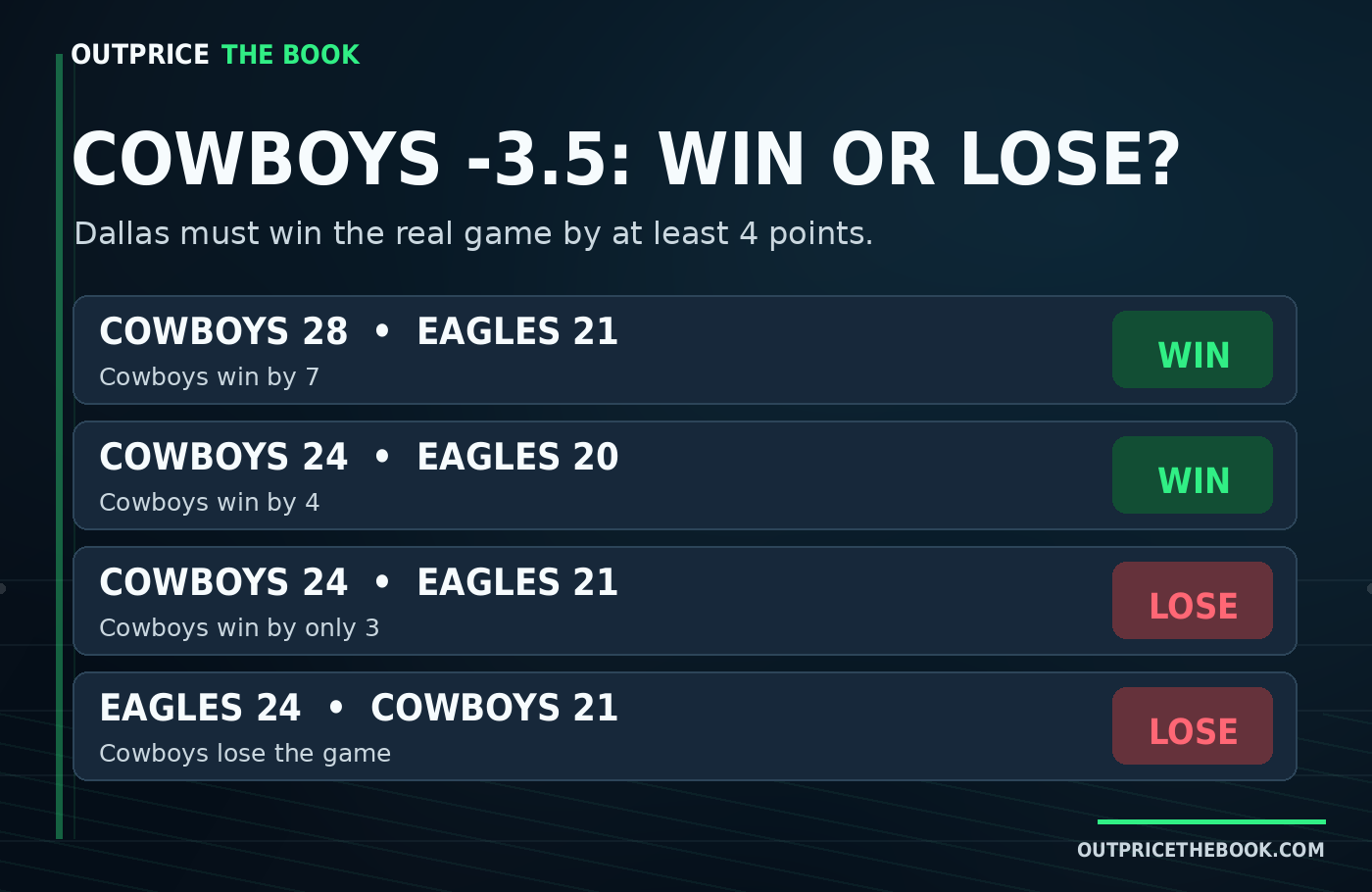
Cowboys -3.5
Dallas is the favorite.
That means Dallas must win by at least 4 points for your bet to win.
Just winning the football game isn't enough.
| Final score | Cowboys -3.5 bet |
|---|---|
| Cowboys 28, Eagles 21 | WIN — Cowboys won by 7 |
| Cowboys 24, Eagles 20 | WIN — Cowboys won by 4 |
| Cowboys 24, Eagles 21 | LOSE — Cowboys only won by 3 |
| Eagles 24, Cowboys 21 | LOSE — Cowboys lost the game |
Here's where beginners sometimes get confused.
They see their team win the football game and think their bet automatically won too.
Not necessarily!
If you bet Cowboys -3.5 and Dallas wins by only 3 points, you lose your bet even though Dallas won the game.
That's why the spread matters.
Why Is There a .5 After the Number?
Good question.
Why not just make the spread 3 points instead of 3.5?
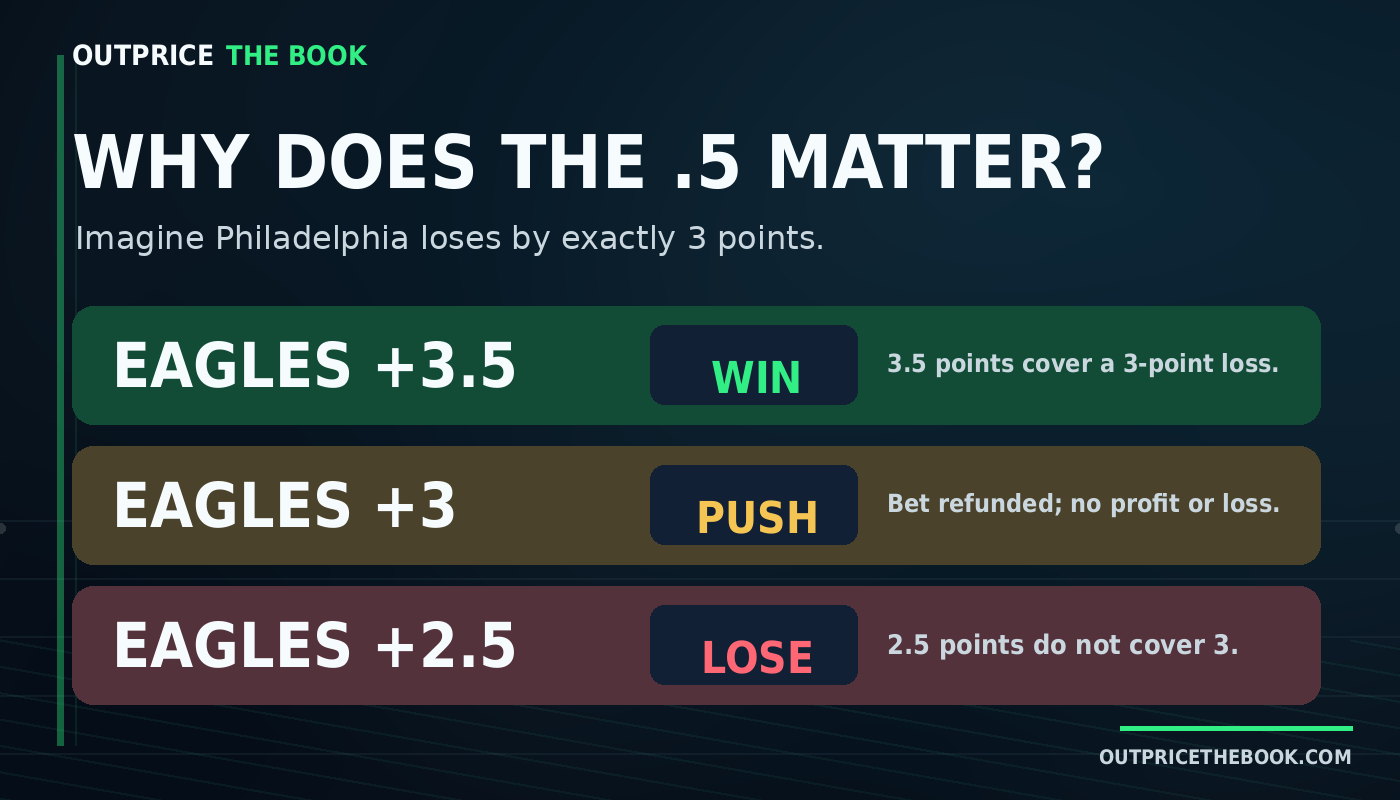
Because that little half-point prevents a tie on the bet.
Let's say you bet:
Eagles +3.5
Philadelphia loses by exactly 3 points.
You WIN.
But what if you had Eagles +3 instead?
If Philadelphia loses by exactly 3 points, the bet is a push.
A push simply means you get your original wager back. You don't win or lose money.
Here's the difference:
| Your bet | Eagles lose by 3 |
|---|---|
| Eagles +3.5 | WIN |
| Eagles +3 | PUSH — money returned |
| Eagles +2.5 | LOSE |
That little half-point can be the difference between winning, losing, or getting your money back.
And yes, it can be frustrating when you're on the wrong side of it.
What Does It Mean to Cover the Spread?
You'll hear people say things like:
"The Eagles covered."
"Dallas didn't cover."
"The underdog covered but lost."
What does that actually mean?
Covering the spread simply means your team did enough to win the bet after the point spread is applied.
For example:
Cowboys -3.5: Dallas must win by 4 or more.
Eagles +3.5: Philadelphia must win or lose by no more than 3.
That's all somebody means when they say a team covered.
What Is a Favorite and an Underdog?
You'll see these two words everywhere in sports betting.
The favorite is the team the sportsbook expects to be stronger in that matchup. On a standard point spread, the favorite has a minus sign.
The underdog is the team given the imaginary head start. It has a plus sign.
For example:
Chiefs -6.5
Kansas City is the favorite. They need to win by at least 7 points.
Raiders +6.5
Las Vegas is the underdog. They can win outright or lose by no more than 6 points.
And here's something important:
Being the favorite does not mean a team is guaranteed to win.
Favorites lose games all the time.
Underdogs win games too.
And sometimes the underdog loses the game but still covers the spread.
How Much Money Do You Win on a Spread Bet?
Now let's talk about the actual money.
Imagine the sportsbook shows:
Eagles +3.5 (-110)
There are two different numbers here.
+3.5 is the point spread. It tells you what Philadelphia needs to do for your bet to win.
-110 is the betting price, also called the odds. It tells you how much you win compared with how much you risk.
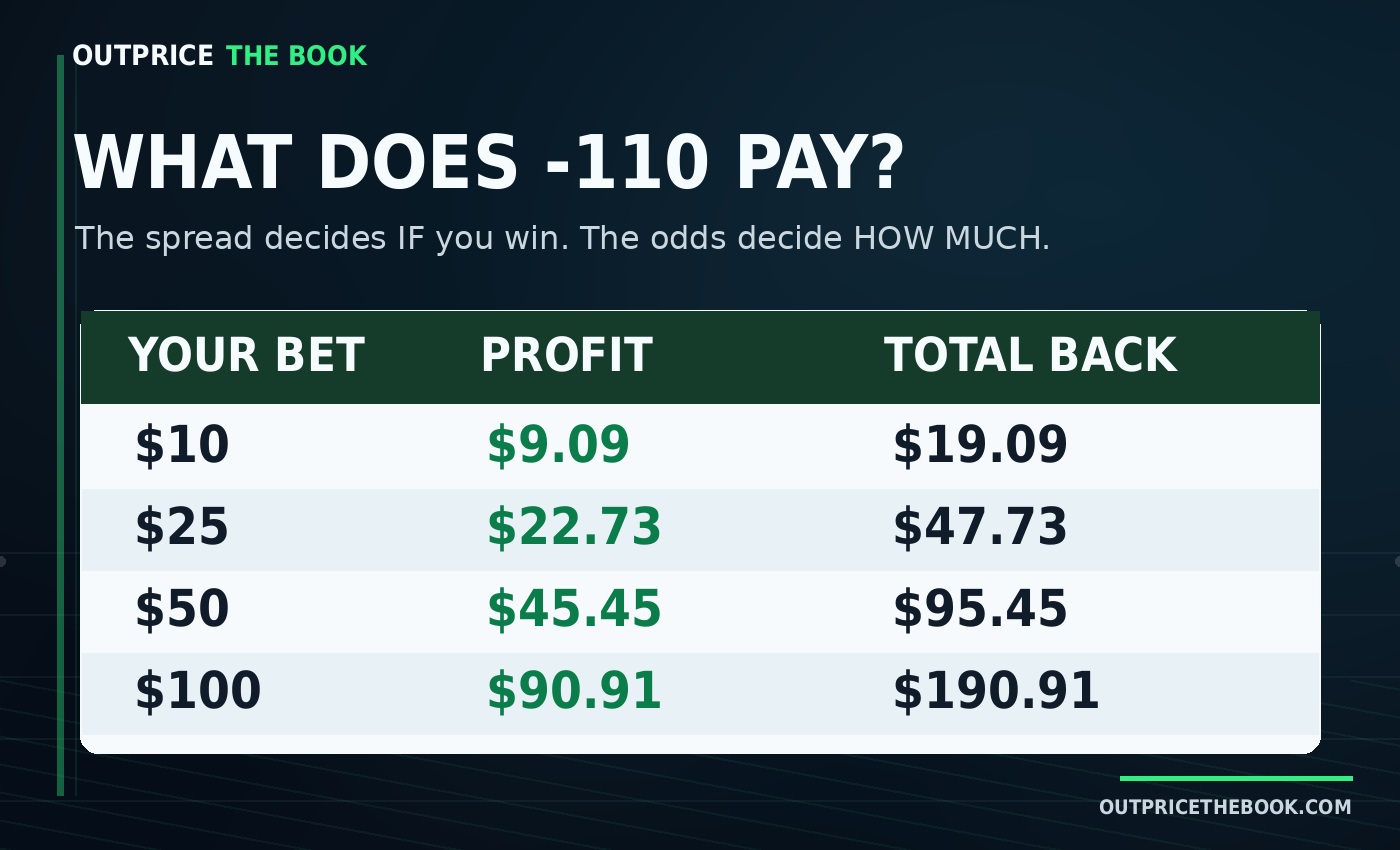
At -110, here's what some winning wagers pay:
| Your wager | Your profit | Total paid back |
|---|---|---|
| $10 | $9.09 | $19.09 |
| $25 | $22.73 | $47.73 |
| $50 | $45.45 | $95.45 |
| $100 | $90.91 | $190.91 |
The total paid back includes your original wager.
So if you bet $50 and win $45.45, the sportsbook returns $95.45.
But if the bet loses, you lose your original $50.
Remember: The spread determines whether you win. The odds determine how much you win.
Do Point Spreads Work the Same in Basketball?
Yep!
The exact same idea works in basketball.
Let's say the game is:
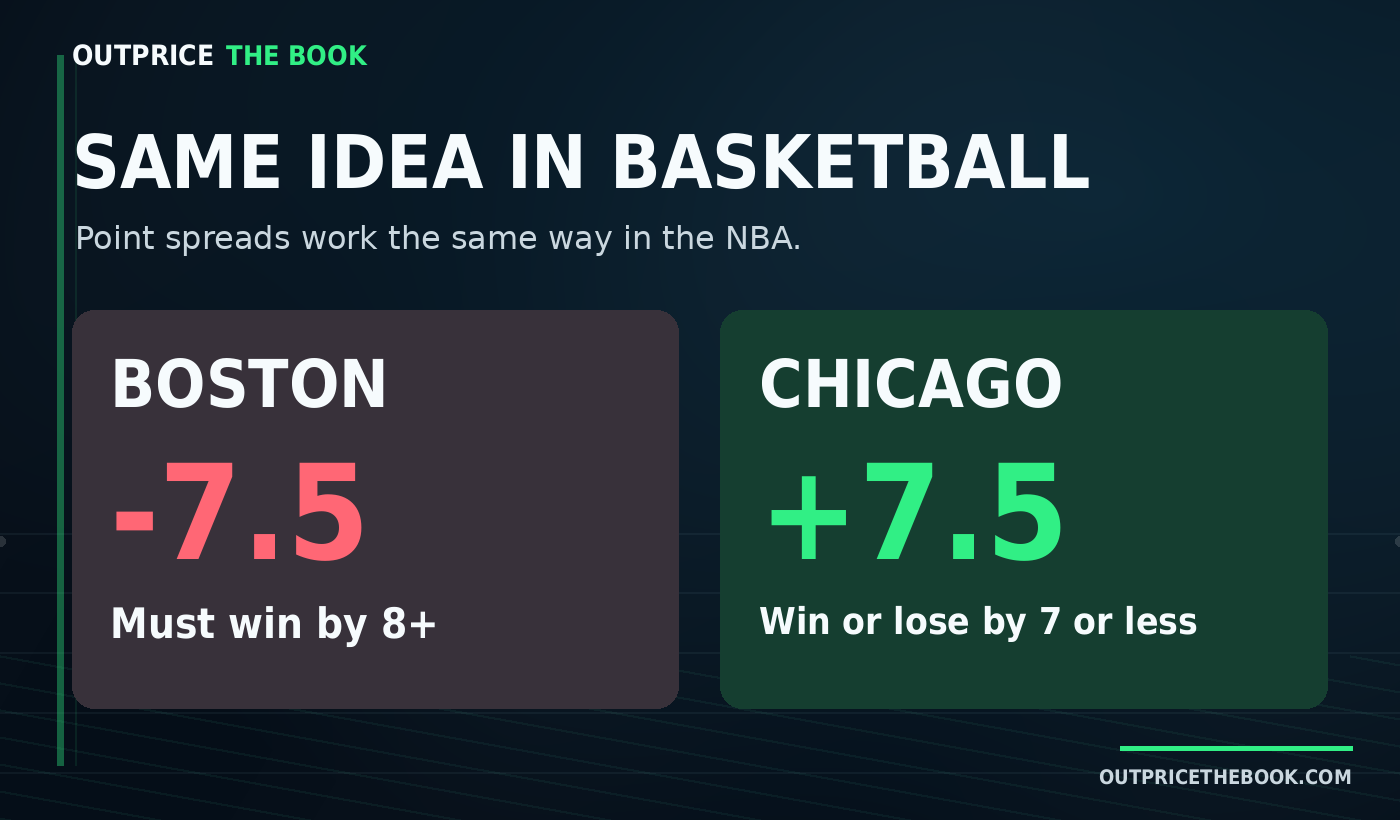
Boston Celtics -7.5
Chicago Bulls +7.5
If you bet Boston -7.5, the Celtics must win by at least 8 points.
If you bet Chicago +7.5, the Bulls can win the game or lose by 7 points or fewer.
It doesn't matter whether the final score is 115–110 or 130–125.
What matters is how many points separate the two teams.
For standard full-game NFL and NBA point spreads, overtime generally counts toward the final score too. Always check the sportsbook's specific market rules.
Is Betting the Favorite Better Than Betting the Underdog?
Not automatically.
A lot of beginners think betting favorites is safer because favorites are expected to win.
But remember, you're not just picking who wins.
You're picking whether a team can cover a number set by the sportsbook.
A favorite might win by 3 when the spread is -7.5.
That favorite won the game, but the bet lost.
An underdog might lose by 3 when the spread is +7.5.
That underdog lost the game, but the bet won.
The question isn't simply, "Who is going to win?"
It's:
"Is this team likely to do better than the number the sportsbook is giving me?"
And even when you understand the spread, that doesn't mean you've found a profitable bet. The price matters, and no pick is guaranteed.
Frequently Asked Questions
Can my team lose the game and I still win my bet?
Yes! If you bet a team with a plus spread, it can lose by fewer points than the spread and your bet still wins.
Does +3.5 mean my team starts the actual game with 3.5 points?
No. Those are imaginary points used only to grade the bet. The real game still starts 0–0.
If I bet -3.5 and my team wins by 3, do I win?
No. Your team needed to win by at least 4.
What happens if the spread is exactly 3 and the team wins by 3?
For a standard spread wager, that's a push. Your original wager is refunded.
Is +3.5 better than +2.5?
For the same team, +3.5 gives you an extra point of protection. But the sportsbook may charge a different price for that spread.
Does the favorite always have a minus sign?
On a standard point spread, yes. The favorite gives points while the underdog receives points.
The Bottom Line
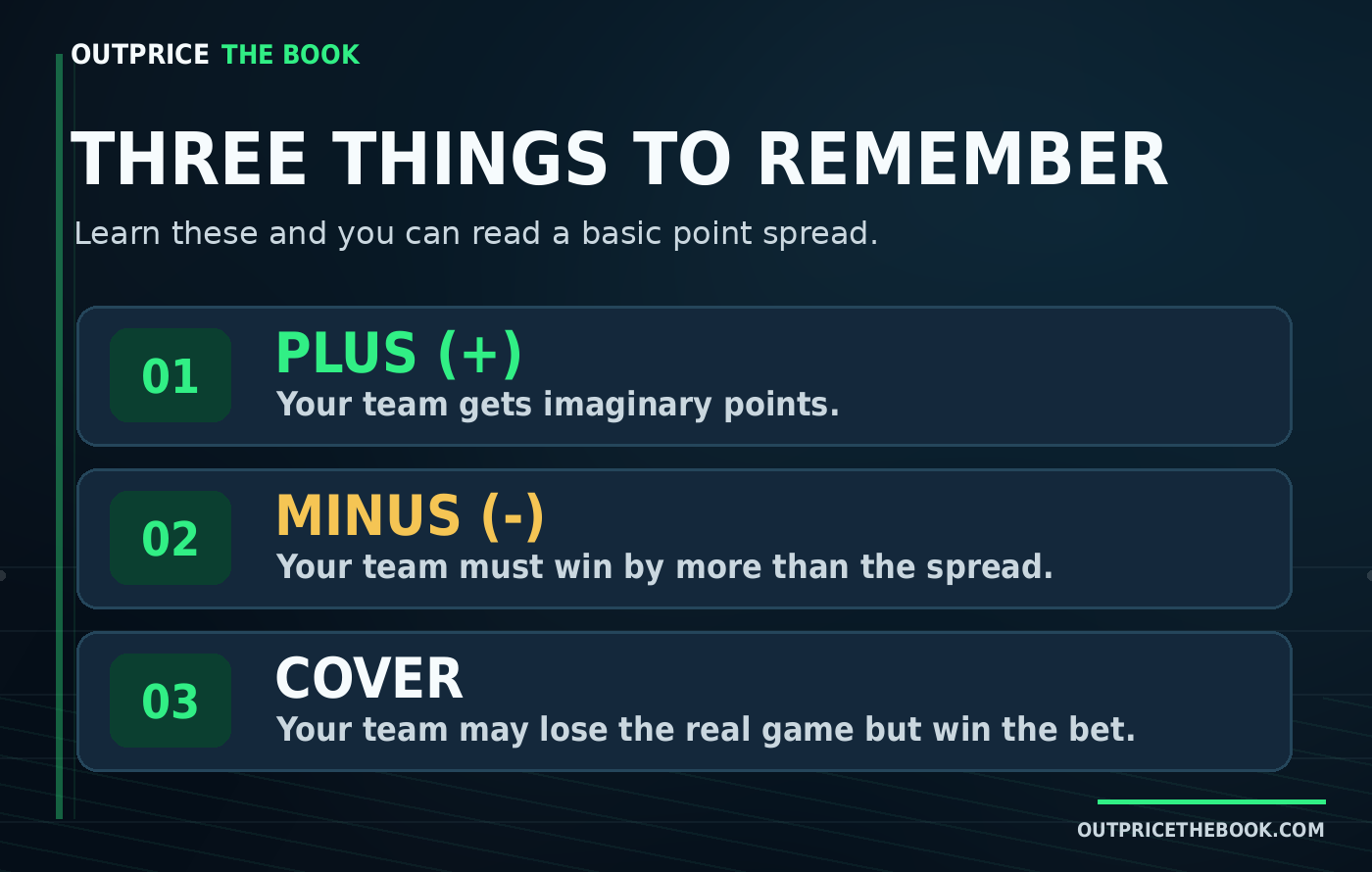
If you remember nothing else from this article, remember these three things:
1. The plus sign (+) gives your team a head start.
2. The minus sign (-) means your team must win by more than the spread.
3. Your team doesn't always have to win the game for your bet to win.
That's point spread betting.
Once you understand those three things, reading a football or basketball betting line becomes a whole lot easier.
And before you place any wager, make sure you understand both the point spread and the odds you're paying.
Welcome to Outprice The Book
At Outprice The Book, we believe people should understand what they're betting on, not just blindly follow a pick.
We publish sports selections with their original lines, odds, and results so you can see the actual record—including the losses.
Want to see what a real spread selection looks like?
Visit OutpriceTheBook.com, check out Today's Picks, and explore our permanent betting results.
Sports betting involves financial risk. No selection is guaranteed to win. Bet only money you can afford to lose.